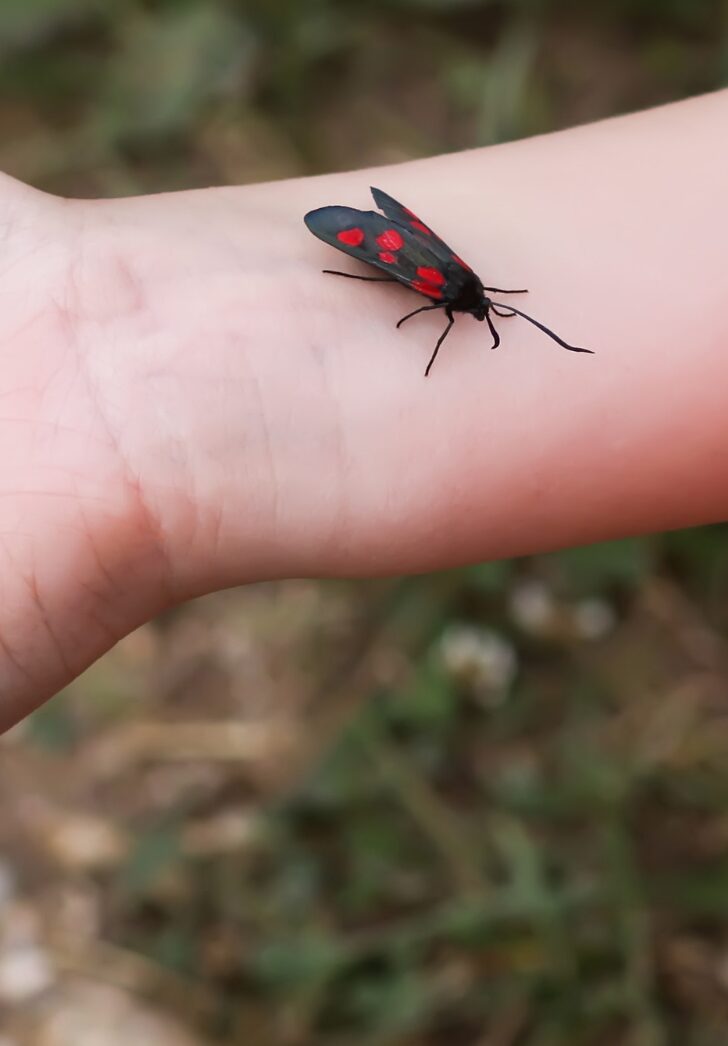
Insects are one of the most fascinating discoveries for young children.
Whether it’s a ladybug crawling on a leaf or a butterfly flying through the garden, insects naturally capture children’s curiosity and invite them to observe the world more closely.
Spring and summer are perfect seasons to explore insects through simple nature-based learning activities.
With a few hands-on experiences, toddlers and preschoolers can begin learning about insects while developing observation skills, vocabulary, and curiosity about the natural world.
Here are a few simple insect learning activities you can try with your child.
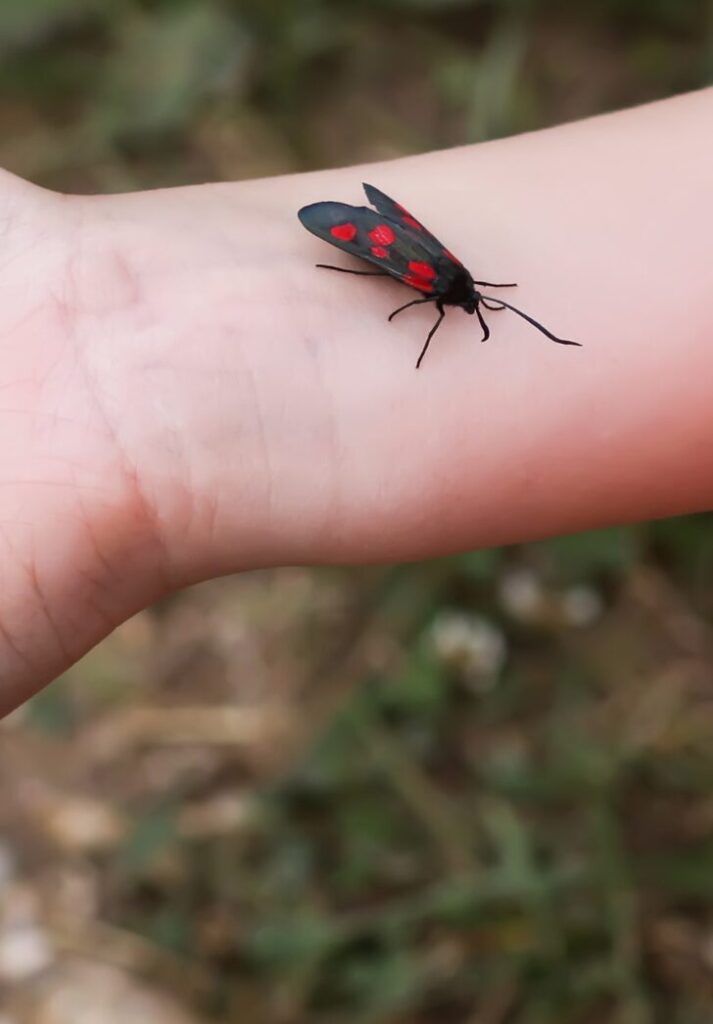
1. Go on an Insect Discovery Walk
One of the best ways to introduce insects to young children is through outdoor exploration.
Take a slow walk in your backyard, garden, or local park and invite your child to look for insects.
You might see:
- ants
- butterflies
- beetles
- bees
- caterpillars
Encourage your child to observe carefully.
You can ask simple questions like:
• What color is the insect?
• How many legs does it have?
• Is it flying or crawling?
Observation walks help children develop curiosity and attention to detail.
2. Observe Insects with a Magnifying Glass
Young children love using real tools.
A simple magnifying glass allows them to explore insects in a new way.
You can look closely at:
- wings
- legs
- patterns
- body shapes
This type of activity helps children slow down and carefully observe nature.
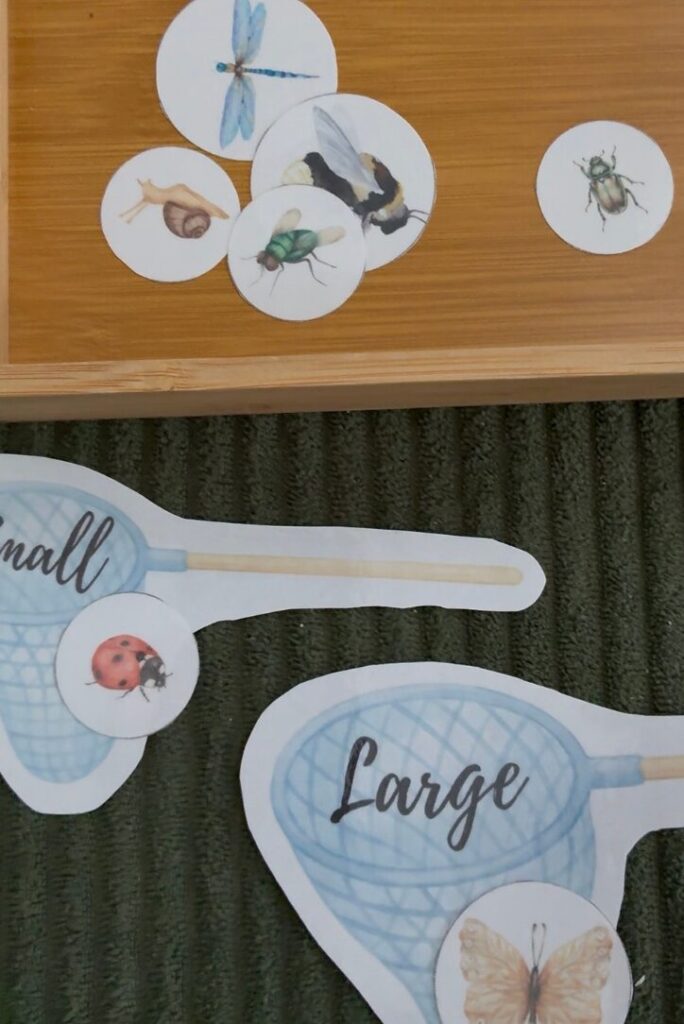
3. Sort Insects by Size
Sorting activities are wonderful for early math skills.
You can invite your child to sort insects into two groups:
- big insects
- small insects
This helps develop:
• classification skills
• visual comparison
• early math thinking
4. Practice Early Writing with Insects
For preschoolers who are beginning to develop writing skills, insect-themed activities can make learning more engaging.
Children can trace simple insect words or practice early writing through playful activities connected to nature.
This supports both literacy development and fine motor skills.
5. Create an Insect Exploration Journal
If your child enjoys observing insects outside, you can invite them to draw or record what they see.
An insect exploration journal allows children to:
- draw insects they observe
- note colors or shapes
- build early science skills
It also encourages children to spend more time observing nature.
Printable Insect Unit Study for Young Children
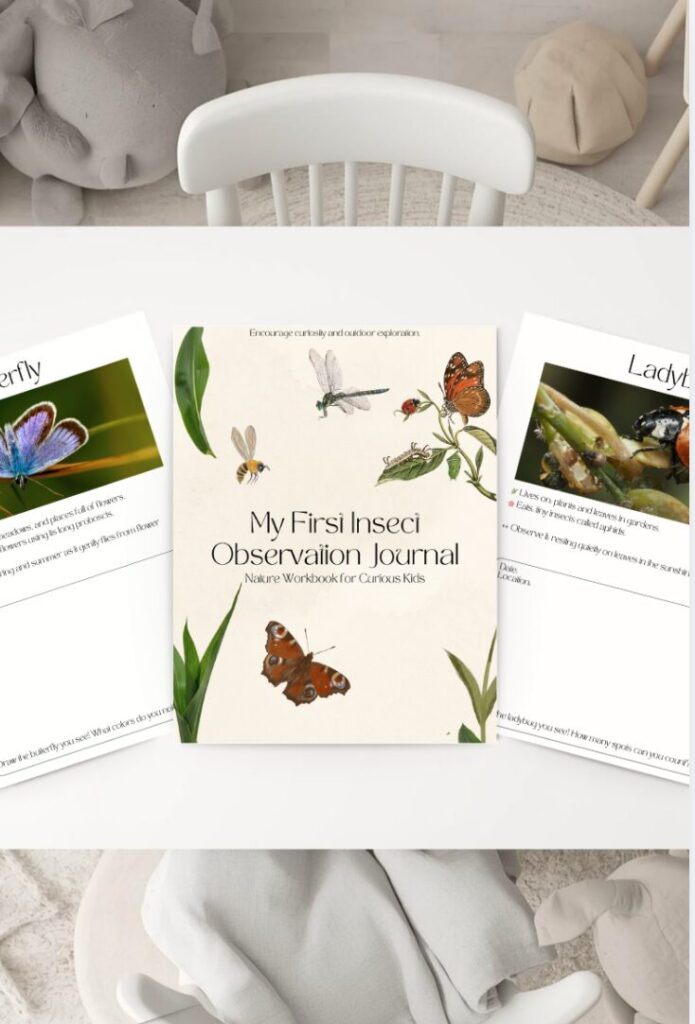
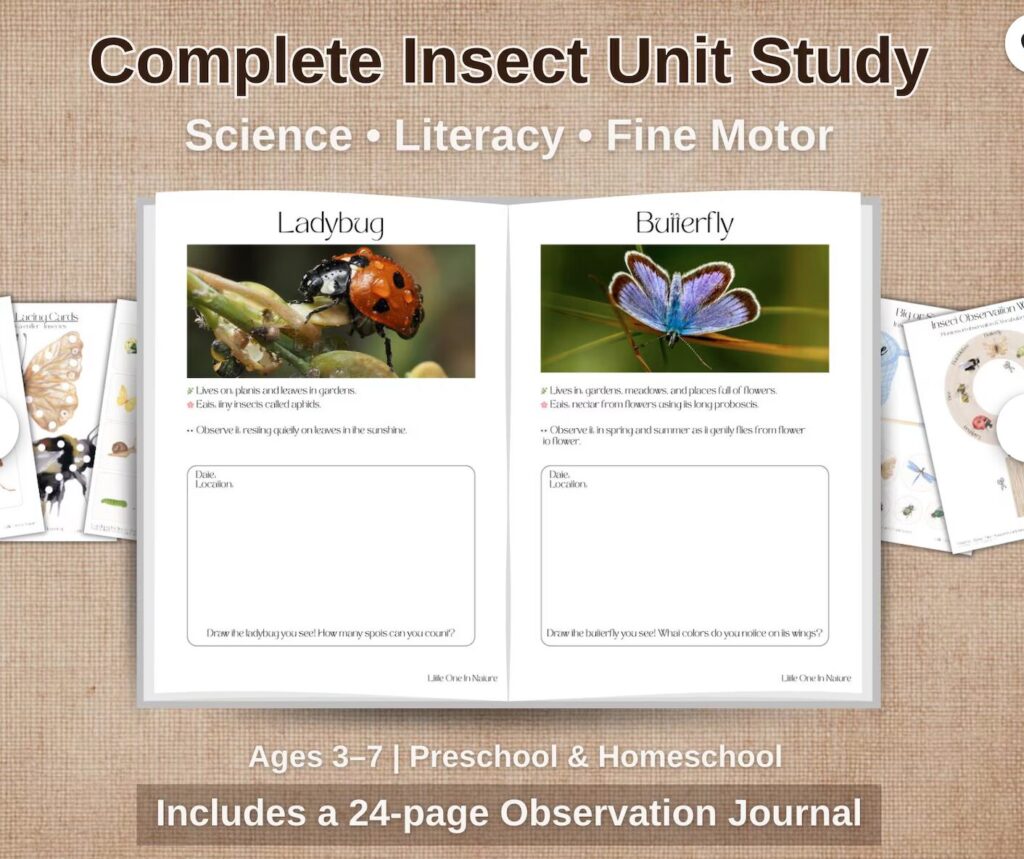
If you’d like a complete set of activities to explore insects with your child, I created a Nature-Inspired Insect Unit Study Printable Bundle.
This printable activity bundle is designed for toddlers and preschoolers and includes a variety of hands-on learning activities inspired by Montessori and nature-based learning.
The bundle includes more than 15 activities such as:
🐞 insect matching activities
🦋 butterfly anatomy exploration
🔍 printable insect magnifying tool
✏️ early writing activities
🪡 insect lacing cards for fine motor skills
📏 sorting insects by size
📓 outdoor insect exploration journal
🖼 nature-inspired insect posters and anatomy
These activities help children explore insects through observation, play, and hands-on discovery.
Because the activities are simple to prepare, parents can easily use them at home, during homeschool learning time, or after outdoor nature walks.
How to Use the Insect Unit Study
You can use these printable activities in many ways:
• create a small insect learning basket
• use them after outdoor exploration
• include them in homeschool science learning
• add them to a Montessori shelf activity
The goal is not to rush through the activities, but to allow children to explore insects slowly and naturally.
Explore the Printable Insect Unit Study
If you’d like to explore insects with your child through calm, hands-on activities, you can find the Insect Unit Study Printable Bundle in my Etsy shop.
Insects offer a wonderful opportunity for young children to explore the natural world.
Through simple observation, hands-on activities, and nature exploration, children can develop curiosity and appreciation for even the smallest living creatures.
Learning about insects can become a beautiful way to nurture a child’s connection with nature.


Leave a Reply