Spring is the perfect season to refresh your home, simplify your spaces, and rethink how your child learns and plays 🌸
Creating a spring Montessori corner doesn’t require a large room or expensive materials. With a few intentional choices, you can design a calm, beautiful space that supports independence, learning, and a gentle connection to nature.
In this article, I’ll guide you step by step to create a Montessori corner for spring, designed for children aged 1 to 5, that is functional, inspiring, and highly Pinterest-worthy ✨
Why create a Montessori corner in spring?
A Montessori corner is a child-sized space designed to encourage:
- independence
- concentration
- freedom of choice
- hands-on learning
Spring adds a beautiful layer to this approach: nature-based learning 🌿
Soft colors, natural materials, and seasonal activities help children slow down, observe, and reconnect with the living world.
A spring Montessori corner helps your child:
- feel grounded and secure
- channel energy in a meaningful way
- develop natural curiosity
- build confidence through independence
1. Choose the right location for your Montessori corner
You don’t need a dedicated room. A Montessori corner can be created:
- in the living room
- in your child’s bedroom
- in a quiet corner of a shared space
Key elements to look for:
- natural light if possible
- a calm, low-traffic area
- visibility for supervision without interruption
💡 Spring tip: placing the corner near a window allows children to observe weather changes and nature outside.
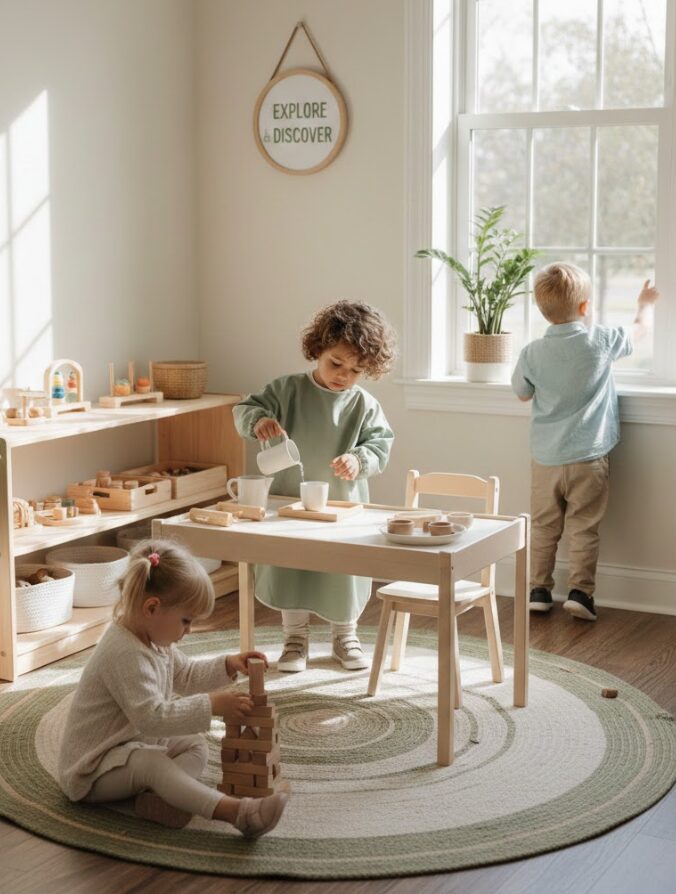
2. Montessori furniture: simple, low, and accessible
Furniture is the foundation of any Montessori corner. Everything should be accessible so your child can choose activities independently.
Recommended furniture:
- low shelf
- child-sized table and chair
- floor mat or rug
🌱 For a spring Montessori corner, choose:
- natural wood
- light, neutral colors
- simple, uncluttered designs
3. Add Montessori activities inspired by nature-based learning
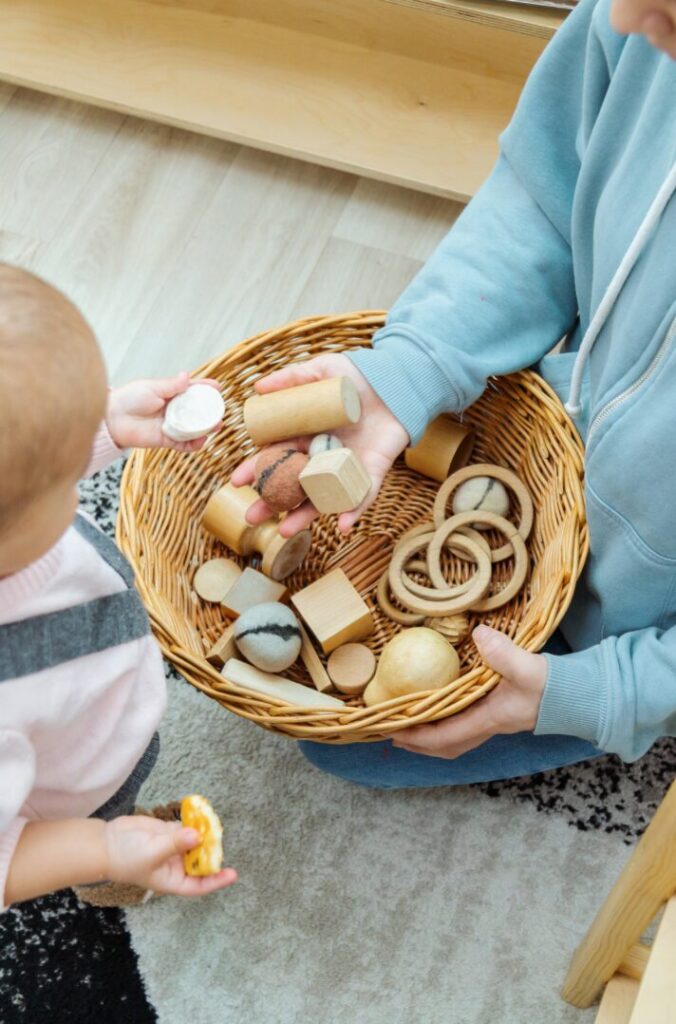
The activities you place in your Montessori corner are just as important as the space itself. In spring, focus on activities connected to nature and the seasons.
Great spring Montessori activities:
- spring sensory bin
- transferring activities
- nature-themed puzzles
- practical life trays
👉 Sensory bin / Montessori learning trays
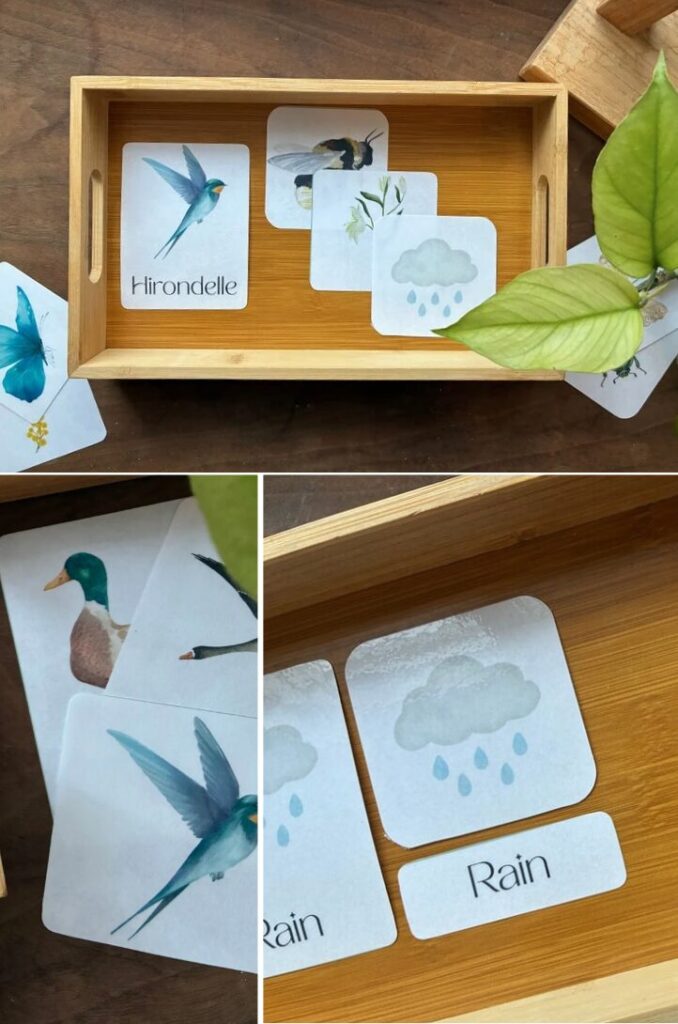
4. Use Montessori 3-part cards to structure learning
Montessori 3-part cards are perfect for calm, independent activities and help bring structure to your Montessori corner.
In spring, cards can feature:
- colors
- insects
- birds
- weather
That’s exactly why I created my Nature-Based Montessori 3-Part Cards, designed to fit beautifully into a spring Montessori corner 🌼
👉 Your Montessori nature cards
Why they work so well in a Montessori corner:
- encourage independent learning
- support language development
- help organize the space
- suitable for multiple ages
5. Keep your Montessori corner simple and uncluttered
A successful Montessori corner is never overcrowded.
The golden rule: less is more.
Practical tips:
- display 5–7 activities at a time
- rotate materials weekly or biweekly
- one activity per tray
💡 Spring idea: rotate indoor activities with items collected outdoors (leaves, stones, flowers).
6. Make your spring Montessori corner inspiring and Pinterest-worthy
This is where the visual magic happens ✨
Simple decorative touches:
- botanical prints
- baskets with natural elements
- a small plant (real or artificial)
🌿 The goal isn’t perfection, but creating a warm, peaceful environment that invites exploration.
Final thoughts
Creating a spring Montessori corner in your home is about more than design—it’s about offering your child a space where they feel capable, calm, and connected to the world around them 🌸
With a few intentional furniture choices, nature-inspired Montessori activities, and Montessori 3-part cards focused on nature, you can create a learning space that supports your child’s development in a gentle and meaningful way.


Leave a Reply