If your pre-K friends grip a crayon like a fist, snip the air instead of the paper, or give up halfway through zipping a coat, you are not alone. Teachers everywhere are noticing that little hands arrive at school with less strength and control than they used to. The good news? A few calm, well-planned fine motor centers for pre-K can change that in a single season.
Fall is the perfect time to start. Leaves, acorns, pumpkins and scarecrows give children something real to touch, sort and cut, and the slower pace after back-to-school routines makes it easier to introduce new stations. Below are eight Montessori-inspired, low-prep ideas you can rotate through October and November, plus tips for setting them up so they run smoothly while you work with a small group.
Why Fine Motor Centers Matter in Pre-K
Fine motor skills are the small movements of the fingers, hands and wrists. They are the foundation for holding a pencil, using scissors, buttoning, opening a lunch container and, later, writing letters with control.
When children practice these movements in short, playful bursts every day, they build:
- Hand strength and endurance, so writing does not tire them out after one line
- The pincer grasp (thumb and index finger working together), which leads to a correct pencil grip
- Bilateral coordination, using two hands for two different jobs, like holding paper while cutting
- Focus and calm, because careful hand work naturally slows the body down
In a Montessori classroom, this is called “preparation of the hand.” It is not busywork. It is the groundwork that makes everything from art to handwriting easier later in the year.
8 Fall Fine Motor Centers for Pre-K
Each idea below works as an independent station for 2 to 4 children. Keep materials on a tray or in a basket so children can carry the whole activity to a table and return it when they are done.
1. Scissor Skills Strips with a Fall Theme
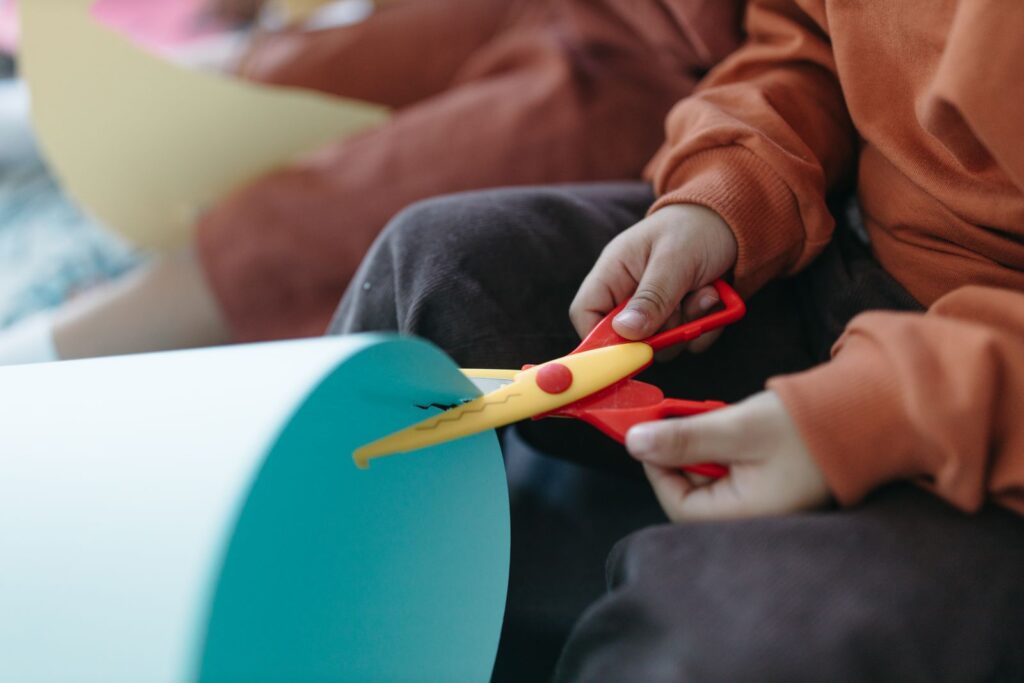
Cutting is one of the hardest fine motor skills for preschoolers, and it improves fastest with short, frequent practice. Start with straight lines, then move to zigzags, waves and curves.
Print a set of cutting strips on cardstock and place them in a basket with child-sized scissors and a small “scrap bowl.” The Pumpkin and Cottagecore scissor strips inside the Fine Motor Centers Mega Bundle are made exactly for this, with progressive lines that grow with your students.
Teacher tip: Remind children of “thumbs up” scissors. A small sticker on the thumb hole helps them remember which way to hold them.
2. Cut-and-Build Scarecrow Craft
Once children can cut simple lines, give them a project that feels big. A scarecrow craft combines cutting, gluing, coloring and following directions, and the finished work makes a beautiful fall bulletin board.
This Scarecrow Craft and Fall Cutting Practice set includes color and blackline templates, a “Parts of a Scarecrow” labeling page and an “If I Were a Scarecrow” writing page, so you can stretch it across an art center, a vocabulary lesson and a writing center in the same week.
3. Leaf and Acorn Tweezer Transfer
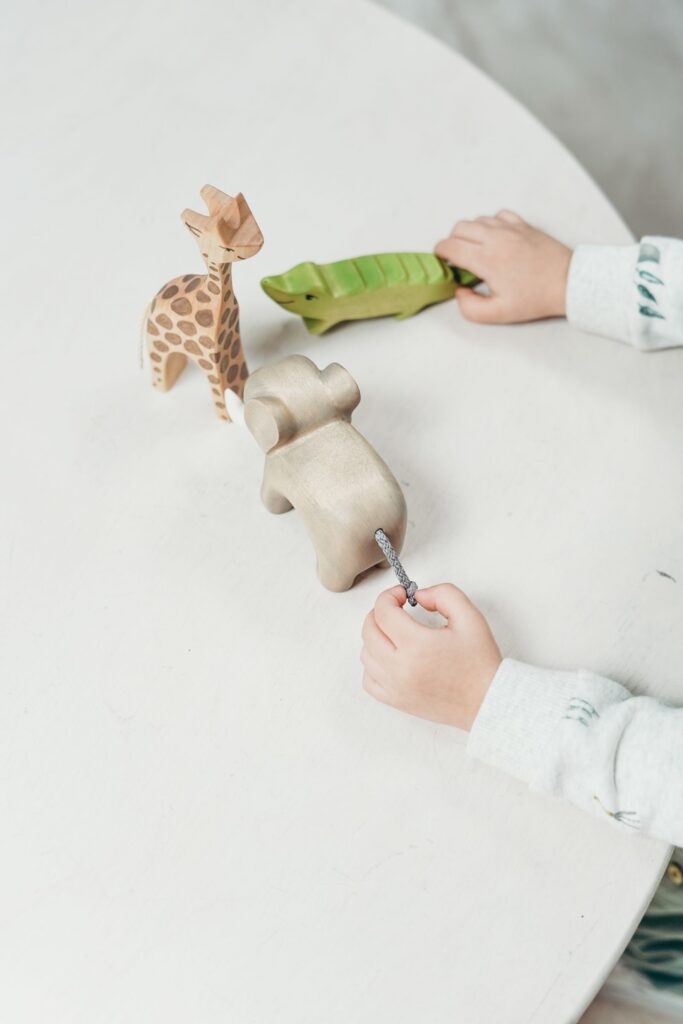
Collect small natural treasures on a nature walk: acorn caps, tiny pinecones, seeds or pressed leaves. Place them in one bowl with an empty bowl or ice-cube tray beside it, and add child-safe tweezers or tongs.
Transferring one object at a time builds the exact pincer muscles children need for pencil grip. To add math, ask them to put one acorn in each section of the tray and count as they go.
4. Lacing Cards with Nature Shapes
Lacing is wonderful for hand-eye coordination and patience. Print lacing cards on cardstock, laminate them, punch holes around the edges and add a shoelace with a taped end.
The bird and weather lacing cards in the fine motor centers bundle fit a fall migration or weather unit nicely. For younger children, start with fewer, larger holes.
5. Pre-Writing Tracing Trays
Before children write letters, they need to master the lines that make them: vertical, horizontal, diagonal, curves and circles. Slide pre-writing tracing cards into a dry-erase pocket, or place a card next to a shallow tray of salt, sand or cornmeal for finger tracing.
The sensory version is especially calming for children who resist pencils. Tracing with a finger first, then a crayon, builds confidence step by step.
6. Name Tracing Mats
There is no word a preschooler wants to write more than their own name. Name practice works beautifully as a fine motor center because it is meaningful and short.
An Editable Name Practice Bundle lets you type each child’s name once and print tracing pages, name mats and a little name book. Add play dough to the center and children can roll “snakes” to build each letter before tracing it.
7. Two-Piece Picture Puzzles
Simple two-piece puzzles ask children to cut along one line, then match and rebuild the picture. They combine cutting, visual discrimination and problem-solving, and they make a lovely “fast finisher” basket.
Use nature images, such as a pumpkin, an owl or a mushroom, so the center ties into your fall theme.
8. Outdoor Fine Motor Nature Hunt
Fine motor practice does not have to happen at a table. Take a small basket outside and invite children to pick up, sort and arrange leaves, sticks and seeds. Peeling bark, snapping twigs and threading leaves onto a pipe cleaner all strengthen little fingers.
To give the hunt structure, the Outdoor Nature Exploration Bundle includes scavenger hunts and observation wheels children can carry outdoors and check off with a crayon, which is one more fine motor win.
Get the FREE Cottagecore Busy Book. Join the Little One in Nature email list and get a complete Cottagecore Busy Book free when you sign up, plus a new free Montessori printable every month and subscriber-only discounts. Get my free busy book
How to Set Up Fine Motor Centers That Run Themselves
The best centers are the ones you do not have to manage every five minutes. A few simple habits make a big difference:
- One activity per tray. Everything a child needs is on the tray, and nothing else is. This is a core Montessori principle and it reduces lost pieces.
- Model once, slowly. Show the activity in silence with slow, exaggerated movements. Children watch your hands more closely when you do not talk.
- Rotate every one to two weeks. Keep 4 to 6 stations out at a time and swap one or two each week so interest stays high.
- Build in success. Offer an easier and a harder version of the same center (straight vs. curvy cutting lines, big vs. small holes).
- Use real, natural materials whenever you can. Wood, cotton, leaves and stones invite calmer, more careful hands than bright plastic.
Adapting Centers for Every Learner
Fine motor development varies widely between 3 and 6 years old. For children who are just starting, choose larger tools (tongs instead of tweezers, chunky crayons, thick laces) and shorter tasks. For children who are ready for more, add a writing step: trace the word, label the picture or record a count.
For students with fine motor delays or sensory needs, short daily repetitions work better than one long session. Pair a hand warm-up (squeezing play dough, finger “push-ups” against the table) with any center, and celebrate effort over the finished product.
Want these centers ready to print tonight? The Fine Motor Centers Mega Bundle gives you 15 nature-themed packs (scissor strips, lacing cards, tracing cards and puzzles) for a full year of fine motor centers. Pair it with the Scarecrow Craft for a finished fall bulletin board.
FAQ: Fine Motor Centers for Pre-K
How long should a pre-K fine motor center last?
Aim for 10 to 15 minutes per rotation. That is long enough for meaningful repetition but short enough that hands do not tire and frustration does not build.
How many fine motor centers do I need?
Four to six stations is plenty for most pre-K classrooms. Rotate one or two each week rather than changing everything at once, so children can build mastery.
What are the best fine motor activities for 3-year-olds?
Start with large movements that use the whole hand: tearing paper, squeezing play dough, transferring with tongs and lacing with big holes. Move to scissors and tweezers as strength and control improve.
Keep Little Hands Busy All Season
Looking for more fall nature ideas? Read our post on 8 Fall Leaf Activities for Preschoolers for gentle, hands-on ways to bring autumn into your classroom.
Ready to set up your fall fine motor centers in minutes? Browse the full collection of nature-inspired, Montessori-friendly resources in the Little One in Nature TPT store.
Leave a Reply